Germany has one of the best safety nets in the world when it comes to illness. However, many expats are confused about who pays their salary when a "flu" turns into a long-term recovery.
If you have been issued a Krankenschein (sick note) that lasts more than six weeks, here is everything you need to know about the transition from your employer's pay to Krankengeld.
The First 6 Weeks: Entgeltfortzahlung
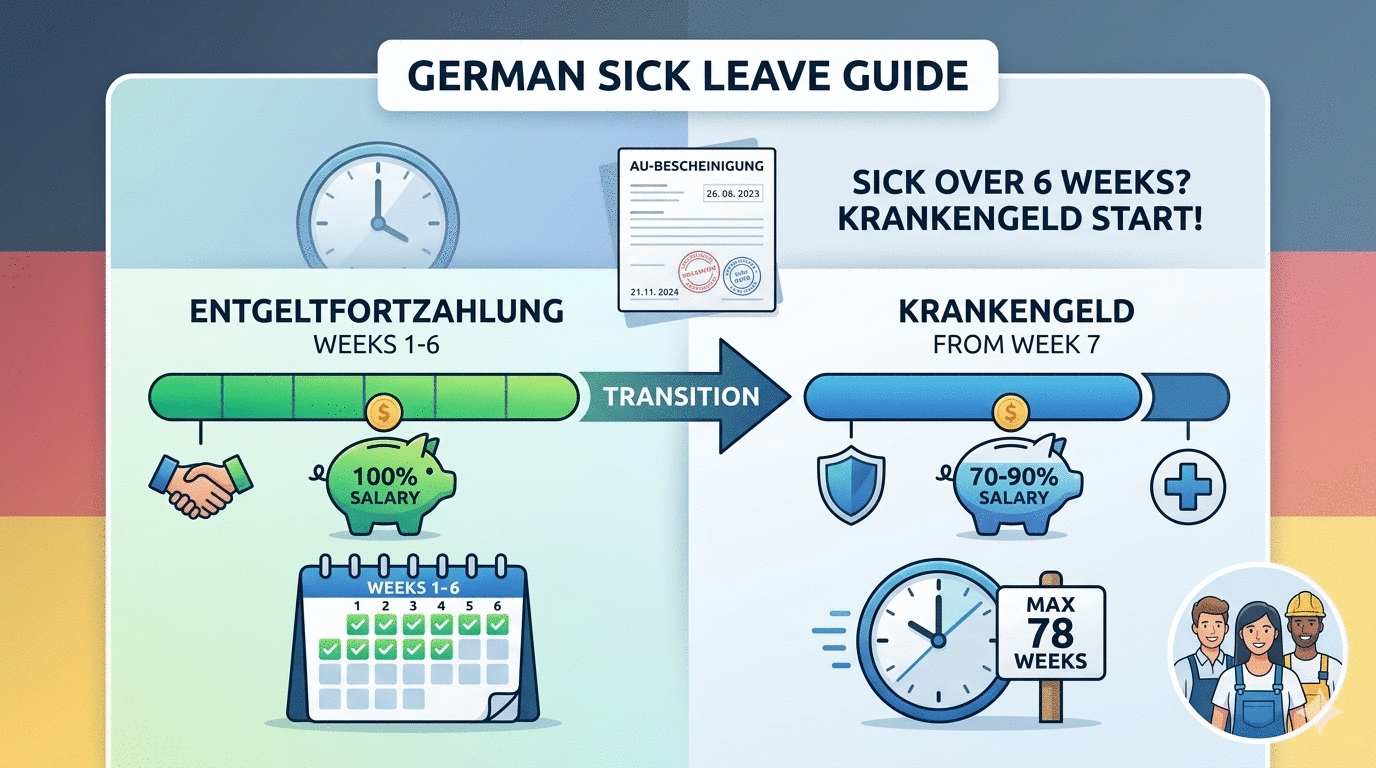
In Germany, if you are unable to work due to illness, your employer is legally required to pay 100% of your salary for the first six weeks (42 days).
- The Rule: This applies to almost all employees who have been with the company for at least four weeks.
- Your Duty: You must provide a medical certificate (AU-Bescheinigung) from your doctor. Nowadays, this is mostly digital (eAU), sent directly to your insurer.
After Week 6: Enter the "Krankengeld"
If your illness continues beyond the 42nd day, your employer stops paying you. At this point, your Statutory Health Insurance (GKV) takes over. This payment is called Krankengeld (Sickness Benefit).
How much will you receive?
It is important to manage your expectations: Krankengeld is not 100% of your net income.
- You typically receive 70% of your gross salary, but no more than 90% of your net salary.
- Social security contributions (pension, unemployment, and care insurance) are still deducted from this amount.
How long does it last?
You can receive Krankengeld for the same illness for a maximum of 78 weeks (1.5 years) within a three-year period.
Important Considerations for Expats
1. The Gap for Freelancers
If you are self-employed and insured in the public system, you are not automatically entitled to Krankengeld. You must opt-in and pay a slightly higher premium to be covered from the 7th week onwards. Without this, a long illness could mean zero income.
2. Private Insurance (PKV) Users
If you have private insurance, you do not receive "Krankengeld" from the state. Instead, you must have a specific component in your policy called Krankentagegeld. You can often choose whether this starts after 4, 6, or even 12 weeks of illness.
3. Taxes
Krankengeld is tax-free when you receive it, but it is subject to the Progressionsvorbehalt. This means it increases your overall tax rate for the year, which might result in a tax payment when you file your annual return.
Steps to Follow if You Are Long-Term Sick
- Keep the doctors' notes seamless: Ensure there are no "gaps" between your sick notes. If your note ends on a Friday, you need a new one by Monday at the latest.
- Communication: Stay in touch with your Health Insurance (Krankenkasse). They will send you forms to fill out once they realize your illness will exceed 6 weeks.
- Check your contracts: Some high-end employment contracts offer a Krankengeldzuschuss, where the employer pays the difference between the insurance money and your full salary for a few extra months.
Summary
The German system ensures you won't be left without money, but you will experience a 10% to 30% drop in your monthly take-home pay. If your lifestyle requires 100% of your income to cover rent and expenses, you might want to look into private supplemental insurance to cover that "gap."